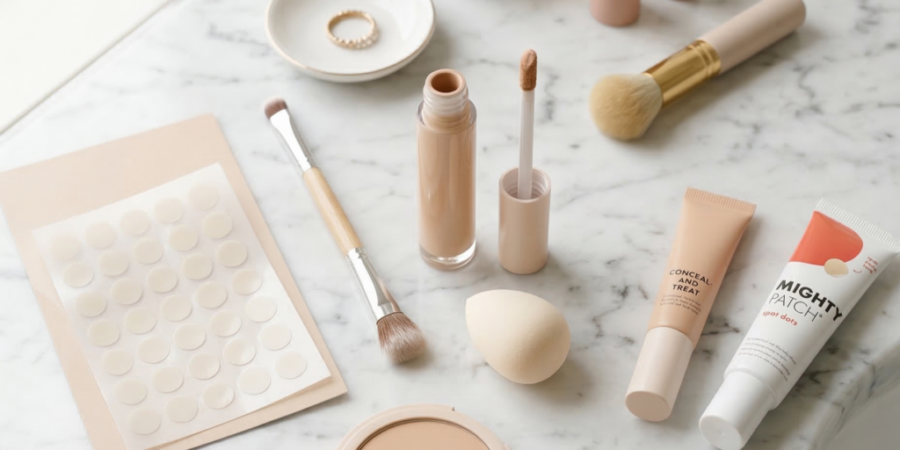
Quick Summary: Makeup for Breakouts Waking up to a breakout right before work, a date, or an important event can […]

Quick Summary: Makeup for Breakouts
- How to patch and prep your skin before makeup so breakouts stay protected and less irritated during application
- A step-by-step routine for makeup for breakouts that helps reduce redness while avoiding cakey foundation
- Simple techniques for an acne-friendly makeup routine that keeps coverage breathable and comfortable
- Spot concealing tips to target redness precisely without layering too much product
- Common mistakes that can make breakouts look more noticeable and how to avoid them

Waking up to a breakout right before work, a date, or an important event can feel frustrating. Redness becomes the center of attention and makeup suddenly seems harder to apply. Foundation may cling to texture, concealer may slide off the spot, and the more product added, the more visible the breakout can become.
That is where makeup for breakouts shifts from simply covering the skin to working with it. When the right technique is used, redness can appear softer and coverage can remain natural without layering too much product.
This guide explains how to cover pimples with makeup using a gentle and strategic approach. The routine focuses on calming the skin first, then building light coverage with precision. The goal is not to hide the skin completely but to create a balanced, natural-looking finish.
By following this acne-friendly makeup routine and applying a few targeted spot concealing tips, breakouts become far less noticeable while the rest of the complexion stays fresh and comfortable.

Step 1: Patch and Prep the Skin
Before foundation or concealer is applied, skin preparation plays a major role in how makeup will sit on a breakout.
Breakouts are often inflamed and sensitive. Applying makeup directly on top of irritated skin can make redness more visible and emphasize texture.
Using an acne patch first helps create a smooth barrier between the breakout and makeup. Hydrocolloid patches can absorb excess fluid and reduce friction from brushes or sponges.
A simple preparation routine may include:
- Start with gentle cleansing: A mild cleanser removes oil and bacteria without irritating the breakout.
- Apply a hydrocolloid patch to the spot: Allow the patch to sit for a few minutes so the skin begins to calm before makeup is applied.
- Hydrate the surrounding skin: Light hydration helps foundation blend evenly. Dry areas often cause makeup to cling to bumps and highlight texture.
This preparation step supports a healthy acne-friendly makeup routine. When the surrounding skin is smooth and hydrated, coverage can blend more seamlessly.
Allowing the patch and skincare to settle briefly can improve how the rest of the makeup routine performs.

Mighty Patch Original Patch from Hero Cosmetics – #1 Hydrocolloid Acne Pimple Patches for Face…
- THE #1 ACNE PATCH* IN THE GAME: The reason people keep coming back to the Mighty Patch Original patches? Because they work when it counts. *Based…
- SHRINKS THE LOOK OF PIMPLES WITH JUST 1 MIGHTY PATCH: As soon as you notice a whitehead, hit with a Mighty Patch and let it do its thing. After…
Last update on 2026-03-17 / Affiliate links / Images from Amazon Product Advertising API
(As an Amazon Associate, we earn from qualifying purchases.)

Step 2: Apply Light Base Around the Breakout
When redness appears, the first instinct is often to apply foundation directly on top of the breakout. Unfortunately, heavy layers can highlight texture and make the spot stand out even more.
A better approach is to apply your base around the breakout first, not directly over it.
Follow these simple steps:
- Start with a light or medium coverage foundation.
Blend it into the surrounding skin to even out your complexion. - Focus on the areas around the breakout.
This softens the contrast between the red spot and the rest of your face. - Use tools that create thin layers.
A damp sponge or a soft brush helps build breathable coverage. - Keep layers light and gradual.
Thick foundation can slide off raised areas or collect around them. - Build coverage slowly.
Thin layers help the skin look smoother while still minimizing redness.
This technique keeps makeup for breakouts looking natural because the surrounding skin tone becomes balanced before covering the spot itself.

L’Oreal Paris True Match Super-Blendable Foundation, Medium Coverage Liquid Foundation Makeup, N…
- Science That Sees Your True Match – Formulated with 6 pigments for the most precise match. 99 percent of women found their true match in a…
- Makeup Foundation: Our liquid foundation formula locks in moisture and provides medium coverage with a natural finish that adapts to any skin…
Last update on 2026-03-17 / Affiliate links / Images from Amazon Product Advertising API
(As an Amazon Associate, we earn from qualifying purchases.)

Step 3: Precision Spot Concealing
Once the surrounding skin tone has been evened out, targeted concealing can reduce redness directly on the breakout.
This step introduces one of the most effective techniques for how to cover pimples with makeup: spot concealing.
Instead of applying concealer across the entire face, only the areas that appear red receive coverage.
The process can follow a few simple steps.
- Use a small brush or fingertip: Smaller tools allow precise placement of product.
- Apply a tiny amount of concealer directly onto redness: Avoid covering the entire raised area. Focus only on the red sections.
- Press rather than rub the product: Pressing helps keep the base layer intact and prevents spreading irritation.
One helpful spot concealing tip involves letting the concealer sit for a few seconds before blending. Allowing the product to settle slightly can increase its coverage.
Afterward, gently tap the edges so the concealer merges with the surrounding foundation.
When done correctly, the coverage blends into the complexion while maintaining a natural finish.

Clinique Even Better All-Over Full Coverage Concealer + Eraser Makeup Makeup For Dark Circles | With…
- FULL-COVERAGE CONCEALER: Long-wearing, full-coverage liquid concealer covers imperfections with all-day staying power.
- HYDRATING CONCEALER INSTANTLY PERFECTS: Formulated with hyaluronic acid, this concealer camouflages imperfections for a flawless look. Helps…
Last update on 2026-03-17 / Affiliate links / Images from Amazon Product Advertising API
(As an Amazon Associate, we earn from qualifying purchases.)

Step 4: Blend Edges and Set Strategically
Blending properly helps coverage look like real skin instead of a visible patch of concealer.
After applying concealer, soften the edges so the coverage melts into the surrounding skin.
Follow these steps for a smooth finish:
- Tap gently around the spot.
Use a sponge or fingertip to lightly tap around the concealer. - Blur the edges, not the center.
The goal is to soften the transition between the concealed area and natural skin. - Avoid dragging the product.
Pressing keeps the concealer in place and prevents lifting the base.
Once the edges look smooth, move on to setting the makeup.
Instead of powdering your whole face, focus only on the areas that need it.

Maybelline Fit Me Matte + Poreless Pressed Face Powder Makeup & Setting Powder, Natural Beige…
- Matte And Poreless Powder Face Makeup: Ideal for normal to oily skin, this long-lasting powder leaves a natural, poreless-looking finish with…
- A Shade That Fits Me: Maybelline Fit Me finishing powder provides coverage for a wide array of skin tones, from Ivory to Mocha; Use as a setting…
Last update on 2026-03-17 / Affiliate links / Images from Amazon Product Advertising API
(As an Amazon Associate, we earn from qualifying purchases.)
Set strategically:
- Apply a small amount of powder on the concealed spot.
This helps lock the coverage in place. - Lightly set the surrounding skin if needed.
This prevents shifting during the day. - Add powder to the T-zone for oily skin.
Forehead, nose, and chin may need extra shine control. - Avoid heavy powder directly on the breakout.
Too much powder can emphasize texture and dryness.
Keeping layers thin is the foundation of an acne-friendly makeup routine. Breathable makeup tends to last longer and looks more natural throughout the day.
For touch-ups:
- Refresh only the areas that need it
- Use blotting papers or a small amount of powder
- Avoid layering product over the entire face
Targeted touch-ups help maintain smooth coverage without creating buildup.
Additional Tips and Tricks
Small adjustments can improve how makeup for breakouts performs throughout the day.
These practical tips help maintain smooth coverage while keeping the skin comfortable.
- Layer products gradually: Several thin layers generally look more natural than one thick layer.
- Choose flexible formulas: Creamy concealers adapt better to skin movement and reduce the chance of cracking.
- Keep tools clean: Regularly washing brushes and sponges prevents bacteria buildup that could irritate acne.
- Use pressing motions when blending: Pressing makeup into the skin helps coverage stay intact.
For oily or combination skin, blotting papers can help remove excess shine without disturbing concealer.
Using minimal product and refreshing strategically helps coverage remain balanced throughout the day.
Common Mistakes and How to Avoid Them
Certain habits can make breakouts appear more noticeable. Avoiding these mistakes can significantly improve results when applying makeup for breakouts.
- Applying heavy concealer first: Thick concealer placed directly on a breakout often highlights texture. Thin layers applied gradually are more effective.
- Over-powdering early in the routine: Excess powder can create dryness that draws attention to bumps.
- Blending directly on irritated skin: Rubbing the breakout can spread redness and disturb surrounding makeup.
- Using too much product over patches: Acne patches perform best when makeup layers remain light.
Avoiding these issues allows coverage to stay smooth while reducing the visual impact of breakouts.
Final Touch
Breakouts can appear at inconvenient times, but the right routine can make them much easier to manage. Effective makeup for breakouts begins with calming the skin using a patch and gentle preparation. Applying base around the breakout helps even the complexion before concealer is added.
Precision spot concealing softens redness while keeping coverage natural. Blending the edges and setting strategically ensures the makeup remains breathable and smooth. Using thin layers and mindful application techniques allows the skin to look balanced without heavy product buildup.
With the right approach, makeup for breakouts can help create a calm, polished appearance while keeping the skin comfortable throughout the day.
FAQs
Can this routine be used on severe breakouts?
Yes, but layers should remain thin and application should stay precise to prevent irritation.
Are special products required for sensitive skin?
Most acne-friendly makeup products can be used with this routine.
Will concealer slide off during the day?
When edges are blended and the area is lightly set, coverage can last for many hours.
Can the patch step be skipped?
Skipping the patch may cause makeup to cling to texture and appear cakey.
Is this routine suitable for oily skin?
Yes, light touch-ups and controlled powder application can help maintain balance.
How often should touch-ups be applied?
Touch-ups should only be done when necessary and should focus on the specific area.
Does this routine treat acne?
No. The routine reduces redness and improves coverage but does not treat breakouts.