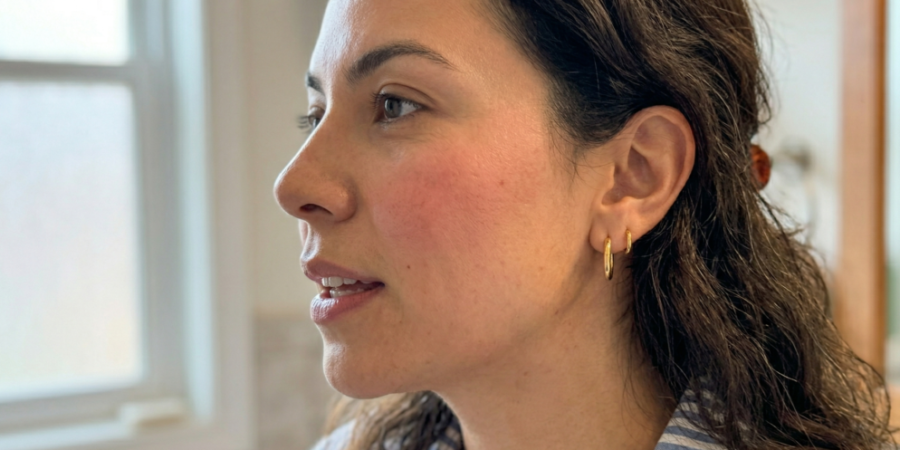
Quick Summary: How to Apply Cream Blush If you’ve applied cream blush and ended up looking clown-round or patchy, the […]

Quick Summary: How to Apply Cream Blush
- Cream blush belongs on the cheekbone ridge, not the apples of the cheeks
- Blush balms and cream blush use the same application technique; the difference is pigment intensity
- Formula-skin compatibility matters as much as placement; a matte or powdered base repels cream product
- The ring finger is the right tool for most beginners because it applies the least pressure

If you’ve applied cream blush and ended up looking clown-round or patchy, the problem isn’t your face. It’s that no tutorial has bothered to tell you where the product actually goes, or why the standard advice is working against you.
Cream blush and blush balms are the defining makeup category of 2026. The formula melts into skin, the finish looks hydrated rather than applied, and the flush reads more convincingly natural than powder has ever managed. But the “smile and dab on the apples” instruction still floating around most tutorials is exactly why beginners end up unhappy with the result.
This tutorial fixes that. You’ll learn the finger placement, blending direction, and placement logic that makes cream blush look intentional. No ideal face shape assumed, no skin type skipped.
Affiliate disclosure: This page contains affiliate links. We may earn a commission at no extra cost to you.
Q: What is the fastest way to apply cream blush for beginners? Apply a rice-grain amount of product to the back of your hand, pick it up with your ring finger, press it onto the top of your cheekbone just below the outer corner of your eye, and blend upward toward your temple using small tapping motions. Start with less than you think you need. Cream blush is more buildable than powder, so you can always add.
Cream Blush vs. Blush Balm: What’s the Actual Difference?
Cream blush is a pigmented formula (typically in a pot, compact, or stick) that delivers buildable color. Coverage goes from sheer to bold depending on how much product you pick up. Texture varies between a soft mousse and a denser cream depending on the formula.
Blush balm is a sheerer, more hydrating version that sits closer to the skincare-makeup hybrid category. The pigment is lighter, the finish is glossy or glassy, and the texture is closer to a tinted lip balm than a traditional blush. The flush reads like your skin on its own terms: a wash of color rather than a placed product.
The application technique is identical for both. The real difference is how much pigment each formula deposits, which means blush balms are more forgiving if you apply too much. If you’re new to cream formulas, a blush balm is a lower-stakes starting point.
Why Placement Is Everything
Before you touch any product, you need to find your actual cheekbone. Not the soft, squishy apple that appears when you smile, but the ridge of bone that runs from just below the outer corner of your eye toward your ear.
The “smile and apply on the apples” technique places color too low and too far inward, pulling the face downward. On round faces it can emphasize width. On anyone with more mature skin or slightly drooping cheekbones, it reads as further downward movement, which is the opposite of what you want.
Apply cream blush on the cheekbone itself and sweep upward toward the temple, and the face reads as lifted. That single adjustment is the difference between a flush that looks intentional and one that looks accidental.
One recurring complaint in r/MakeupAddiction threads puts it plainly: “I’ve been doing it wrong for years because every tutorial told me to smile, but smiling is exactly what moved the color to the wrong spot.”
What You’ll Need
Formula compatibility note: Heavy matte or long-wear foundations can repel cream blush, causing pilling or streaking. Cream blush works best over a hydrating foundation, tinted moisturizer, or a natural-finish base. If you’re working over a full-coverage matte formula, prep the cheekbone area with a damp beauty sponge before applying blush.
Recommended products (affiliate disclosure: this page contains affiliate links and we may earn a commission if you purchase, at no extra cost to you):
Good (drugstore): e.l.f. Monochromatic Multi Stick or Flower Beauty Blush Bomb, $6 to $10 Better (mid-range): Rare Beauty Soft Pinch Liquid Blush or Tower 28 BeachPlease Lip + Cheek Balm, $20 to $24 Best (prestige): NARS Blush Balm or Chanel Baume Essentiel Multi-Use Glow Stick, $40 to $55
Shade testing note: We have not independently tested every shade in the above recommendations across the full skin tone range from fair through very deep. For medium, deep, and very deep complexions, Tower 28 BeachPlease and Rare Beauty Soft Pinch have the most documented community wear results across a wider range. Check r/brownbeauty and r/swatchitforme for real-wear results on deeper skin tones before purchasing.
Tools you’ll need: your ring finger (the lowest-pressure finger, ideal for cream formulas), a damp beauty sponge, and setting spray.
Step-by-Step: How to Apply Cream Blush for Beginners
Step 1: Complete your skin prep and base makeup first.
Moisturizer is not optional. Dry or flaky skin creates patchy cream blush application regardless of how good the formula is. Apply your foundation, tinted moisturizer, or bare-skin base and let it settle for 60 seconds before moving on. If you use setting powder, hold off until after the blush is done. Powder applied before cream blush creates a barrier the formula can’t grip, which leads to uneven, sliding color.
Nano Banana Prompt [Close-up, high-definition GRWM-style portrait of a woman with medium tan skin applying moisturizer to her cheekbone area before makeup. Her fingers press gently into the cheekbone ridge. Skin looks freshly hydrated, dewy and smooth, no product on yet. Warm vanity lighting with a soft bathroom mirror reflection. No brand logos or labels visible anywhere in frame.]
Step 2: Find your cheekbone ridge.
Place your index finger horizontally just below the outer corner of your eye. Follow the bone inward toward your nose until you feel a slight ridge. That’s the top of your cheekbone and your placement zone. It sits higher than the apple and closer to the eye than most beginners expect. Identify this spot before picking up any product.
Nano Banana Prompt [Close-up, high-definition portrait of a woman with fair skin and light eyes pressing one finger gently to the top of her cheekbone, just below the outer corner of her eye. The gesture is deliberate, locating bone structure. No makeup product visible yet. Bright bathroom with white tile, natural daylight from a small window. Clean, uncluttered background. No logos or labels visible.]
Step 3: Warm the product on the back of your hand.
Scoop or press a rice-grain amount of cream blush onto the back of your non-dominant hand. Let it sit there for five seconds. Skin warmth softens the formula and makes it significantly more blendable once it hits your face. Skipping this step is what causes the streaking and uneven pickup that happen when cold product goes directly onto cold skin.
Nano Banana Prompt [Close-up of the back of a hand with deep skin, a small dot of coral cream blush visible at the center. The product is slightly softened and glossy from skin warmth. The surrounding skin is bare. Soft daylight from a window, neutral background. No product labels or brand markings visible anywhere in the shot.]
Step 4: Apply with your ring finger using press-and-tap, not swipe.
Pick up the warmed product with your ring finger. Press it directly onto the cheekbone ridge you identified in Step 2, just below the outer corner of your eye. Do not swipe. Swiping drags cream blush across the skin and disturbs the foundation underneath. Press, release, move slightly toward the temple, press again. You’re building coverage with taps. Three or four taps is enough for initial placement.
Nano Banana Prompt [Close-up, high-definition GRWM-style portrait of a woman with light skin applying cream blush with her ring finger. The finger is pressing (not swiping) onto the high cheekbone, just below the outer eye corner. A soft peachy-pink flush is visible building on the cheekbone. Warm vanity lighting, slightly blurred background. No product labels visible.]
Step 5: Blend upward toward the temple.
From the initial placement point, use the same ring finger to tap and blend the color upward toward the temple. The direction matters. Upward movement reads as lifted and downward movement reads as drooping. The color should become more diffused as it approaches the hairline, fading out completely before it gets there. The cheekbone zone should still carry the most intensity.
Nano Banana Prompt [High-definition close-up portrait of a woman with tan skin, ring finger sweeping upward from the cheekbone toward the temple. The cream blush is blended, showing a warm rosy flush at the cheekbone that fades to a barely-there wash near the hairline. Upward sweep direction is clearly visible. Soft daylight from a side window. Natural finish foundation underneath. No labels or logos.]
Step 6: Wait 30 seconds before adding more.
Cream blush takes 30 to 60 seconds to fully set on skin. What looks too light immediately after application often looks right once the formula has settled. Step back from the mirror, look at your face from a normal distance, and then decide if you want more color. If you do, repeat Step 4 with a smaller amount than before. Building in thin layers gives you control that’s impossible to recover once you’ve applied too much at once.
Nano Banana Prompt [GRWM-style medium portrait of a woman with deep skin standing slightly back from a bathroom mirror, examining her blush placement from a distance. Cream blush is visible as a natural, lifted flush on her cheekbone, warm and glowing, not overdone. Bright bathroom lighting, white background. Relaxed, evaluating expression. No product labels visible.]
Step 7: Set with either spray or translucent powder, not both.
Choose one setting method based on the finish you want. Setting spray locks in the cream texture and keeps the dewy quality intact. A light dusting of translucent powder at the outer edges of the blush extends longevity but softens the glow. Do not powder directly over the center of your placement, as this kills the finish. If you’re setting your T-zone or forehead separately, use a brush that stays well clear of the cheekbone area.
Nano Banana Prompt [Close-up of a woman with medium skin holding a small setting spray bottle at arm’s length, misting lightly over her finished face. Cream blush is visible as a warm, dewy flush on the cheekbone. No powder brush in frame. Warm vanity lighting with a blurred mirror background. No brand logos or text visible on the bottle.]
Shade Guide: How to Choose Your Cream Blush Color
The right shade reads like the color your cheeks naturally go, just amplified. Use your natural flush as a starting point, then adjust from there.
For fair to light skin with cool undertones, blue-based pinks and soft mauves reflect back the most naturally. Warm peachy shades work but tend to read more editorial than everyday.
For light to medium skin with warm or neutral undertones, peachy corals and warm roses photograph and wear well across most lighting situations.
For medium to tan skin, deeper corals, brick tones, and warm fuchsias build visible flush without washing out. Sheer balm formulas may disappear entirely on this range, so choose a proper cream blush with real pigment.
For deep to very deep skin, most drugstore cream blushes were not formulated with you in mind. Berry, plum, deep coral, and wine-adjacent tones show up and deliver a lifted flush where lighter shades can’t. Fenty Cheeks Out and Danessa Myricks Blush are among the community-validated options for this end of the range.
Shade testing note: This guidance is based on community-reported results from r/brownbeauty and r/swatchitforme, not independent testing by this publication. If you have medium, deep, or very deep skin and are choosing a product we haven’t flagged as community-validated, read real-wear reviews before purchasing.
Cream Blush for Mature Skin: What Changes
Cream blush is widely recommended for mature skin, and the reasoning holds up. Powder blush settles into fine lines and creates a textured, dusty finish that ages the face. Cream formulas sit on top of skin rather than sinking into it, which reads as fresher.
Two placement adjustments matter specifically for mature skin. Move your placement higher on the cheekbone than the standard starting point. As the face loses volume over time, the cheekbone appears to sit lower, so applying blush closer to the temple counters this visually. If your skin is dry, skip setting powder over the blush entirely and use setting spray instead. Powder over cream blush on dry mature skin flattens the finish and settles into fine lines.
“I switched to cream blush after years of using powder, and my skin looks alive now instead of dusty.” — Reddit, r/MakeupAddiction
Common Mistakes and How to Fix Them
Applied too much. Press a damp beauty sponge over the placement area to lift and diffuse the excess. Press and release, because rubbing disturbs the foundation underneath.
Blush slid or pilled. Your base and formula were incompatible. A heavy matte foundation or any powder applied before the blush creates a barrier the cream can’t adhere to. Wipe the cheekbone area clean with a damp sponge and reapply over bare foundation.
Color disappeared by noon. The formula is likely too sheer for your skin tone (common with blush balms on deeper skin) or it was applied over powder. Rebuild from Step 1 with a more pigmented formula applied directly over foundation.
Blush looks blotchy. Product went on too cold or too fast. Warm it on the back of your hand before application, slow down the tapping, and give each tap time to connect with the skin. Blotchiness is almost always a temperature and pace issue.
Product Recommendations
Affiliate disclosure: this page earns a commission on purchases made through these links at no extra cost to you.
Drugstore ($6 to $12): e.l.f. Monochromatic Multi Stick is among the most-cited drugstore options in r/drugstoreMUA, with buildable pigment and workable texture at a price point that makes it easy to test. Flower Beauty Blush Bomb delivers more pigment than most products in this range.
Mid-range ($20 to $28): Tower 28 BeachPlease Lip + Cheek Balm has documented community wear results across a wider range of skin tones than most products in this tier. Rare Beauty Soft Pinch is highly pigmented; a single small dot covers both cheeks, so apply it like a concentrate.
Prestige ($40 to $55): NARS Blush Balm blends without effort and wears without creasing on dry or combination skin. Chanel Baume Essentiel is the right pick if a glass-skin flush effect is specifically what you’re after.
Deep skin–validated: Fenty Beauty Cheeks Out Freestyle Cream Blush and Danessa Myricks Blush have the most consistent documentation of shade range and formula performance for deep to very deep skin tones, based on community swatching.
How to Layer Cream Blush with Other Products
Cream blush follows the same rule as every other cream or liquid product: it goes on before any powder. Moisturizer goes first, then foundation, then concealer, then cream blush, then setting spray. If powder is part of your routine, it goes last and stays away from the blush zone.
For longer wear, you can layer cream blush under powder blush. Apply the cream as your color base, let it set for 60 seconds, then lightly press a powder blush on top for grip. This works particularly well in humid conditions or for events where you need the flush to last past the 8-hour mark.
Cream blush can also go directly onto bare skin with no foundation. Without foundation as a buffer, the formula reads more intensely, so start with even less product than you think you need.
Frequently Asked Questions
Can you use cream blush on oily skin? Yes, with some adjustments. Choose a water-based or lightweight formula rather than a dense pot cream. Apply it after foundation and before any powder, then set the outer edges of the blush zone with a light dusting of translucent powder. Fenty Cheeks Out and Tower 28 have better documented results on oily skin than heavier cream formulas.
Does cream blush go on before or after setting powder? Before, always. Setting powder applied to the cheekbone area before blush creates a barrier the cream can’t grip, which causes uneven and patchy application. Finish your blush first, then set the rest of your face with powder while keeping the brush away from the cheekbone.
How do I stop cream blush from looking overdone? Use less product than you think you need and build in layers. A rice-grain amount warmed on the back of the hand, applied with press-and-tap motions, assessed after 30 seconds, that process almost always prevents overload. Overdone cream blush is usually the result of applying product straight from the compact to the face before you can gauge the intensity.
Can I use cream blush without foundation? Yes. Apply it directly to bare moisturized skin. The formula reads more intensely without a base layer underneath, so start with noticeably less product. A blush balm is often the better choice for bare-face wear because the pigment is lighter and more forgiving.
How long does cream blush last? Over a compatible foundation base, cream blush should hold for 6 to 8 hours on normal to dry skin. On oily skin it moves faster without powder to anchor it. Setting spray extends wear meaningfully without changing the finish.
Does cream blush work on mature skin? Cream blush is generally the better choice for mature skin. It sits on top of fine lines rather than settling into them, which reads as more hydrated. Apply it higher on the cheekbone than the standard position, and skip setting powder directly over the blush zone.
What’s the difference between liquid blush and cream blush? Liquid blush is more pigmented and sets faster, which means you have less time to blend before it locks. Cream blush sets more slowly and gives you more control during blending. Once the placement is dialed in, liquid blush tends to last longer. For beginners still learning where to put it, cream is more forgiving.
Quick Poll
Why did you vote that way? Drop your take below.